Online Quran Classes & Learning for Special Needs
Online Quran classes and learning for special needs provides personalized 1-to-1 Quran instruction for children and adults with autism, ADHD, dyslexia, Down syndrome, speech delays, and other learning differences. Lessons use adaptive pacing, visual teaching tools, repetition, and sensory-friendly methods tailored to each learner's unique cognitive rhythm.
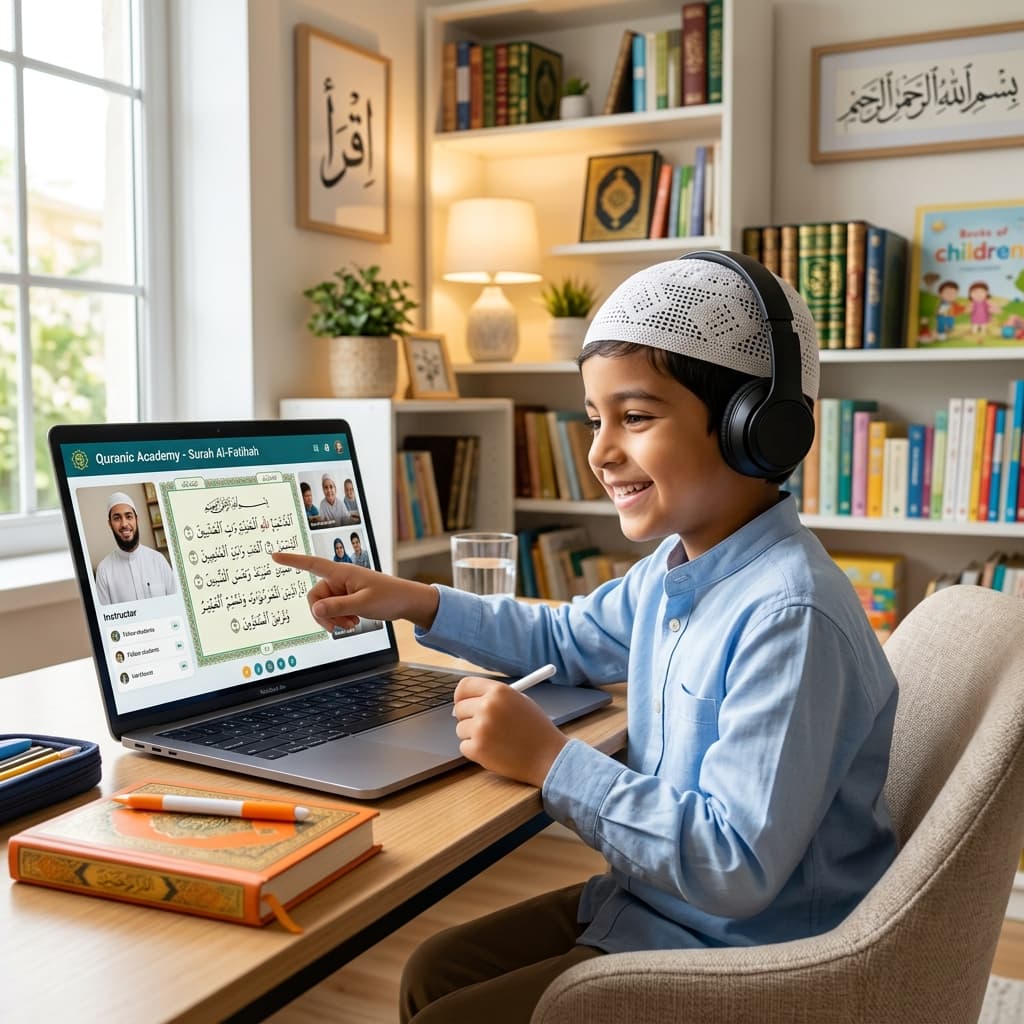
Adaptive Special Needs Learning
Adapted 1-on-1 Pacing
1,000+
Students Taught
50+
Vetted Tutors
100%
Dedicated 1-on-1
Flexible
Adaptive Pacing
Who Are Special Needs Quran Classes For?
We believe every learner deserves access to Quranic education, structured in a way that respects their unique cognitive profile.
Autism Spectrum (ASD)
Structured routines, sensory-friendly visual schedules, low vocal stimuli, and consistent tutor matching to eliminate transition anxiety.
ADHD & Focus Challenges
15–20 min micro-sessions, dynamic activity switches every 5 minutes, movement-friendly Tajweed drills, and visual reward gamification.
Dyslexia & Reading Ease
Color-coded Arabic Harakat, high-contrast typography, auditory-first phonetics breakdown, and zero time or speed pressure.
Down Syndrome
Patient spaced micro-repetition, melodic recitation chanting, illustrative Islamic Prophet stories, and warm emotional encouragement.
Speech & Language Delays
Visual mouth-placement video modeling, phoneme isolation drills, AAC device integration, and zero articulation anxiety.
Learning Disabilities
Custom Individual Learning Plans (ILP), multi-sensory cognitive teaching tools, micro-milestone mastery, and regular parent reports.
Students Enrolled
Qualified Tutors
Countries Served
Parent Satisfaction
Sisters Batch
Available
Why Choose Our Online Quran Classes & Learning for Special Needs?
Qualified & Verified Tutors
Certified teachers with Hifz and Ijazah credentials, selected through a rigorous vetting process.
Personalized Plan
Custom study pacing that adapts dynamically to your learning speed and memory capacity.
Safe & Supportive Environment
A respectful, encouraging, and monitored virtual classroom suitable for all family members.
Parent Progress Updates
Detailed weekly feedback reports and direct parent-tutor communication metrics.
Affordable Fees
Exceptional quality education with flexible subscription models and a free trial period.
Global Community
Connecting students across the USA, UK, Canada, Australia, and Europe with qualified native scholars.
How We Teach Quran Online
Our seamless 4-step framework makes it effortless to begin, whether starting from the Arabic alphabet or preparing for full Quran memorization.
Book a 3-Day Free Trial
Submit your simple form. Select your preferred timezone, days, and time slots. No credit card required.
Free Level Assessment
Meet your teacher for a complimentary 1-on-1 assessment to determine your child's exact starting level.
Start Customized 1-on-1 Classes
Enjoy interactive lessons with digital whiteboards, color-coded Tajweed, and supportive guidance.
Track Progress & Get Certified
Receive monthly evaluation reports from your teacher and earn completion certificates as you advance.
Specialized Teaching Faculty
Learn from patient, verified Quran educators experienced in adaptive 1-on-1 instruction.

Ustadh Ahmed is a master of the 10 Qira'at, holding multiple Ijazahs from renowned scholars in Egypt. He specializes in making complex Tajweed rules accessible to children and beginners through patient, adaptive phonetics.
Experience
Senior Faculty
Languages
English, Arabic
Core Specializations & Qualifications
Our Proven Methodology
A structured approach to ensure lasting success.
1. Assessment
We evaluate your current reading level, learning pace, and goals to create a customized milestone roadmap.
2. Learning
Master manageable portions with real-time feedback on Makharij, Harakat, and foundational Tajweed rules.
3. Revision
Reinforce retention through structured daily revision, spaced repetition, and weekly manzil check-ins.
4. Testing
Regular evaluations and milestone quizzes track fluency, accuracy, and independent reading confidence.
5. Certification
Earn a verified completion certificate upon graduating each course level, with Ijazah pathways for eligible students.
Overcoming Neurodivergent Learning Challenges
Every student has unique sensory and cognitive rhythms. Our adaptive program is designed to overcome:
Sensory Sensitivity
Short Attention Span
Speech & Articulation
Processing & Repetition
Anxiety & New Settings
Every Muslim child deserves the opportunity to connect with the Book of Allah in a setting where their dignity, cognitive rhythm, and emotional safety are completely respected. Our online Quran learning for special needs program provides gentle, one-to-one adaptive Islamic instruction specifically structured for neurodivergent children and adults—including those with Autism Spectrum Disorder (ASD), ADHD, Dyslexia, Down Syndrome, speech and language delays, sensory processing sensitivities, and learning disabilities.
Unlike rigid classroom settings that demand uniform pacing, our specialized instructors tailor every single minute of instruction to the learner's unique strengths, sensory tolerance, and communication style.
Tailored Quran Learning for Neurodivergent Learners
Children and adults with special educational needs (SEN) do not struggle with the Quran itself; they struggle with conventional, one-size-fits-all teaching systems. We replace high-pressure memorization with positive reinforcement, multi-sensory tools, and patient, adaptive pacing.
         [ 1. Understand the Learner ]
          • Learning preferences
          • Communication needs
          • Attention & pacing
                      │
                      ▼
         [ 2. Personalize the Lesson ]
                      │
     ┌────────────────┼────────────────┐
     ▼                ▼                ▼
[ Visual & Auditory ] [ Adaptive     ] [ Supportive    ]
[ Tools            ] [ Pacing       ] [ Environment   ]
 • Color-Coded        • 15–20 Min     • Zero-Pressure
   Letters              Blocks          Tone
 • Digital            • Movement      • Encouragement
   Whiteboards          Pauses          & Praise
 • Rhythmic           • Micro-        • Parent
   Phonetics            Repetition      Communication
                      │
                      ▼
         [ 3. Support Progress ]
          • Regular lesson adjustments
          • Parent feedback after class
          • Milestone tracking
Specialized Programs by Condition
1. Online Quran Classes for Autism (ASD)
Autistic learners benefit immensely from predictability, clear visual boundaries, and sensory regulation. Our tutors follow autism-aware instructional practices to foster a secure, soothing learning environment:
- Consistent Lesson Routines: Every class follows a structured, predictable rhythm—starting with a calming Dua, transitioning to a familiar letter drill, and concluding with positive reinforcement.
- Visual Schedules & Social Stories: We use clear visual sequence cards so your child always knows what comes next, eliminating transition anxiety.
- Sensory-Friendly Modulation: Tutors maintain a calm, gentle vocal tone with no abrupt sound effects, flashing graphics, or overwhelming visual clutter.
- Dedicated 1-on-1 Matching: Your child learns with the same dedicated teacher in every session, building the trust and familiarity critical for autistic students.
- Read More: Explore our dedicated Quran Classes for Autism or our guide on Quran Learning Strategies for Autism.
2. Online Quran Classes for ADHD & Focus Challenges
Learners with Attention Deficit Hyperactivity Disorder (ADHD) often possess high energy and dynamic intelligence, but experience focus fatigue in standard 30-to-60-minute lectures.
- 20-Minute Focus-Friendly Micro-Sessions: We structure lessons in concentrated 15-to-20-minute intervals designed to optimize peak attention spans.
- Dynamic Activity Switching: Instructors transition activities every 4 to 6 minutes (e.g., from letter tracing to audio recitation, followed by interactive phonics quizzes) to keep engagement high.
- Kinesthetic & Movement Integration: Students are never scolded for moving or fidgeting. We integrate hand-clapping rhythms, tactile tracing, and brief movement breaks.
- Immediate Gamified Rewards: Digital badges, milestone stars, and verbal praise celebrate micro-achievements in real time to sustain motivation.
- Read More: Explore our dedicated Quran Classes for ADHD or our guide on Quran Learning Strategies for ADHD.
3. Online Quran Classes for Dyslexia
Dyslexia impacts visual text processing, letter orientation, and phonetic decoding. Arabic script—with its subtle dot placements and ligatures—requires specialized multi-sensory techniques:
- Color-Coded Makharij & Harakat: We highlight root consonants, Harakat (Fatha, Kasra, Damma), and Tajweed rules (such as Ghunnah, Ikhfa, and Qalqalah) in distinct, contrasting colors.
- Large-Print Digital Worksheets: High-contrast, uncluttered typography prevents letter crowding and visual jumping.
- Auditory-First Reinforcement: Students hear the correct pronunciation repeatedly through patient phonetic breakdowns before being invited to vocalize.
- Zero Speed Pressure: Fluency is never measured against a stopwatch. Precision and confidence are prioritized over reading speed.
- Read More: Explore our dedicated Quran Classes for Dyslexia or our guide on Teaching Quran to Children with Dyslexia.
4. Online Quran Classes for Speech & Language Delays
Children experiencing developmental speech delays, childhood apraxia of speech, or articulation difficulties require exceptional patience and phonological guidance:
- Visual Mouth-Placement Demonstrations: Tutors use high-definition cameras with exaggerated, slow mouth and tongue placements to visually guide sound articulation (Makharij).
- Phonics-Based Sound Isolation: Arabic letters are isolated into individual phonemes, allowing children to practice single sounds at their own pace without cognitive overload.
- Gesture & Non-Verbal Communication Support: We incorporate visual pointing boards, interactive choice cards, and non-verbal confirmation signals according to the child's communication preferences.
- Coordinating with Parents: Instructors coordinate closely with parents so recitation pacing supports the family's individual learning goals.
- Read More: Explore our dedicated Quran Classes for Speech Delays.
5. Online Quran Classes for Down Syndrome & Cognitive Learning Needs
Students with Down syndrome and developmental cognitive delays learn effectively through patient, musical repetition, visual storytelling, and genuine warmth:
- Spaced Repetition & Micro-Steps: Single letters and short Ayat from Surah Al-Fatihah or the 30th Juz are repeated patiently across multiple sessions until fully internalized.
- Illustrative Islamic Stories & Duas: Lessons incorporate gentle visual stories of the Prophets and practical daily Duas to connect recitation to daily life.
- Loving, Encouraging Demeanor: Our tutors focus first on building an emotional bond with the child so Quran class becomes the highlight of their day.
- Read More: Explore our Quran Classes for Down Syndrome and our Quran Classes for Learning Disabilities.
1-to-1 Inclusive Quran Education vs. Conventional Group Classes
| Key Factor | Specialized 1-to-1 Quran Program | Conventional Group Quran Classes |
|---|---|---|
| Pacing & Speed | 100% personalized to child's cognitive speed | Fixed, teacher-driven curriculum pace |
| Lesson Duration | Flexible: 15, 20, or 30 minutes based on focus span | Rigid 45 to 60 minutes causing fatigue |
| Sensory Environment | Controlled, quiet, familiar home environment | Loud, overwhelming classroom stimuli |
| Teaching Approach | Patient, adaptive 1-on-1 pedagogical approach | Fixed group instruction without individualized pacing |
| Parental Presence | Parents actively welcomed to observe & assist | Parents excluded from class interaction |
| Behavioral Strategy | Positive reinforcement & sensory pause breaks | Standard disciplinary classroom management |
| Curriculum Path | Personalized learning plan adapted to learner pace | Standardized, one-size-fits-all syllabus |
Our 5-Pillar Adaptive Teaching Framework
- Diagnostic Assessment (Zero Pressure): We begin by understanding your child's learning preferences, sensory triggers, communication style, and attention span during a relaxed introductory session.
- Personalized Learning Plan: We craft a customized learning roadmap outlining clear, realistic milestones for Noorani Qaida foundation, Tajweed pronunciation, short Surah memorization, and daily Islamic Duas.
- Multi-Sensory Interactive Tools: We combine color-coded visual charts, high-contrast digital boards, rhythmic recitation drills, and gamified reward systems.
- Emotional Safety & Positive Reinforcement: Tutors celebrate every single breakthrough—whether it is identifying a single letter or sitting calmly for 15 minutes.
- Continuous Parent Partnership: Parents receive detailed post-class feedback, milestone updates, and actionable home reinforcement tips after every lesson.
Our Special Needs Adaptive Framework
Our adaptive teaching framework is guided by the academic and pedagogical leadership of Dr. Yusuf Al-Qari (Senior Islamic Studies Curriculum Director, PhD in Islamic Theology, University of Madinah) and Ustadh Ahmed Saeed (Lead Tajweed Instructor, Master of the 10 Qira'at).
- Curriculum Integrity: All foundational Quranic texts, Noorani Qaida phonetics, and Tajweed articulation exercises adhere to authentic classical recitation rules while being adapted for individualized one-to-one pacing.
- Adaptive Instructional Practice: Tutors work from established pedagogical guidelines emphasizing patience, sensory-aware pacing, positive reinforcement, and communication flexibility.
- Regular Review: Curriculum pacing and teaching resources are reviewed periodically to ensure classes remain safe, supportive, and accessible for diverse learning needs.
Adaptive Learning Pathways: Methodology in Action
The following are examples of how our 1-to-1 adaptive teaching methodology is structured across different learning needs. These represent instructional frameworks and adaptations, not individual student outcomes or case studies:
1. Autism Learning Pathway (Visual Structure & Predictability)
- Visual Schedules: Lessons follow a clear visual sequence so the learner understands what comes next, reducing transition stress.
- Predictable Lesson Structure: Consistent class opening, letter practice, and closing routines create a stable, reassuring environment.
- Repetition: Gentle, spaced repetition allows students to internalize letters and short verses without memorization pressure.
- Shorter Learning Blocks: Instruction is organized into focused 15-to-20-minute sessions suited to the learner's energy and sensory threshold.
- Communication-Aware Instruction: Tutors utilize visual choice cards, onscreen pointing tools, and patient vocal pacing for both verbal and non-verbal students.
- Related Programs: Online Quran Classes for Autism and Quran Learning Strategies for Autism.
2. ADHD Learning Pathway (Modular Focus & Transitions)
- Modular Activities: Lessons are segmented into concise, interactive modules (letter identification, recitation repetition, interactive drills).
- Frequent Transitions: Instructors transition activities every 4 to 6 minutes to keep engagement active and minimize mental fatigue.
- Active Recall: Interactive questioning and prompt recall exercises maintain high focus without demanding long passive listening.
- Short Focused Segments: Core learning takes place in concentrated micro-segments with built-in pauses.
- Reinforcement: Positive verbal feedback and milestone rewards encourage steady progress and motivation.
- Related Programs: Online Quran Classes for ADHD and Quran Learning Strategies for ADHD.
3. Dyslexia Learning Pathway (Multi-Sensory Phonics & Pacing)
- Multi-Sensory Arabic Letter Recognition: Letters are distinguished through high-contrast digital displays, color-coded vowels (Harakat), and visual guides.
- Auditory Reinforcement: Tutors pronounce sounds clearly and repeatedly before inviting the student to vocalize, strengthening auditory-phonetic connections.
- Repetition: Systematic review of similar-looking Arabic letters helps eliminate confusion with dots and positions.
- Phonetic & Makharij Support: Articulation points (Makharij) are demonstrated with magnified, slow video modeling to support accurate phoneme formation.
- Paced Reading: Students read at their natural pace with zero time pressure, prioritizing confidence and accurate pronunciation.
- Related Programs: Online Quran Classes for Dyslexia and Quran Learning for Dyslexic Children.
How Parents Can Support Quran Learning at Home
Creating a supportive home environment significantly amplifies your child's comfort and retention:
- Establish a Dedicated Sensory-Friendly Workspace: Choose a quiet, well-lit corner free from visual distractions, background television noise, or sibling interruptions.
- Use Visual Countdowns & Timers: Use visual timers (like sand timers or digital countdown rings) so your child clearly sees when the 20-minute class begins and ends.
- Keep Practice Brief and Joyful: Reinforce letters for just 3 to 5 minutes during daily routines (e.g., pointing out Arabic letters on flashcards during breakfast).
- Prioritize Love Over Perfection: Praise your child's effort and love for the Quran. The Prophet Muhammad ﷺ taught that the one who recites the Quran with difficulty receives a double reward (Sahih Muslim).
Structured Course Pathways
Students progress through tailored milestones designed for their specific cognitive profile:
- Stage 1: Arabic Letter Familiarity & Makharij: Mastering single Arabic letters, visual shapes, and articulation points through color-coded flashcards.
- Stage 2: Harakat & Letter Joining: Understanding Fatha, Kasra, Damma, and basic word construction in the Noorani Qaida curriculum.
- Stage 3: Short Surah Recitation & Daily Duas: Learning Surah Al-Fatihah and the last 10 Surahs of the Quran, alongside essential Islamic manners (Adab).
- Stage 4: Gentle Tajweed & Fluent Quran Reading: Step-by-step recitation of the Holy Quran with adapted Tajweed rules and patient teacher-led guidance.
We also offer specialized regional sessions for families residing in the United States and the United Kingdom, with scheduling matched directly to local time zones.
Adaptive Learning Pathways
Methodology in Action: Transparent examples of how our 1-on-1 adaptive teaching methodology is structured across different learning needs.
Rated Excellent on Trustpilot & Google Reviews
Based on 1,000+ reviews from parents in USA, UK, Canada & Australia
“Visual schedules, predictable lesson structure, repetition, shorter 15–20 minute learning blocks, and communication-aware instruction adapted to verbal and non-verbal learning styles.”
Autism Learning Pathway
Visual Structure & Routine • Methodology Example
Frequently Asked Questions
Find answers to common questions about our online Quran classes.
Experience A Free Quran Class Today
Join 1000+ students from the USA, UK, Canada, and Australia learning Quran with our certified male & female tutors. Classes available 24/7.


